Volatility

Breakout Filters That Actually Matter – Volatility Regimes, Time-of-Day, and Retest Rules

Breakout Filters That Actually Matter – Volatility Regimes, Time-of-Day, and Retest Rules

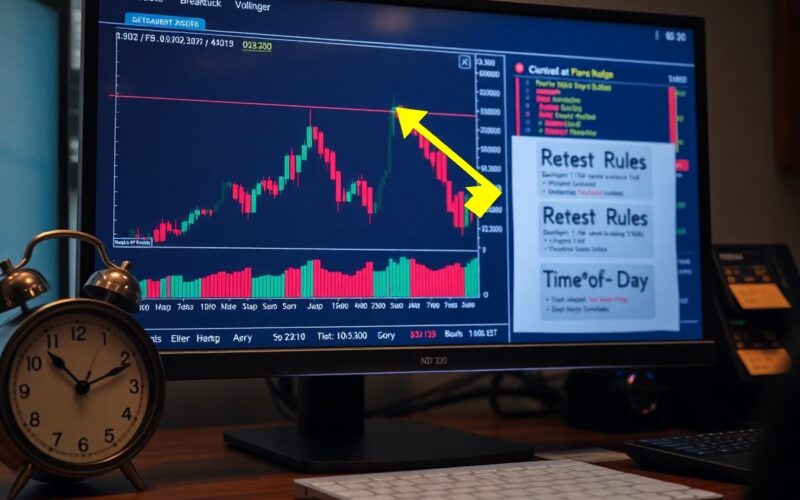
There's a disciplined way to filter breakouts so you avoid false moves and focus on high-probability trades: align entries with prevailing volatility regimes, respect the market's time-of-day liquidity patterns, and enforce strict retest rules before committing capital. By applying these filters you reduce exposure to dangerous false breakouts, capture cleaner trend entries, and make your trade management more consistent - practical steps that improve your edge without adding noise. You should filter breakouts by volatility regimes, respect dominant time-of-day behavior, and enforce strict retest rules to avoid false breakouts that can wipe positions and to boost your win rate and…
Read More
Stop-Loss Placement – Structure-Based Stops vs Volatility Stops (with examples)

Stop-Loss Placement – Structure-Based Stops vs Volatility Stops (with examples)

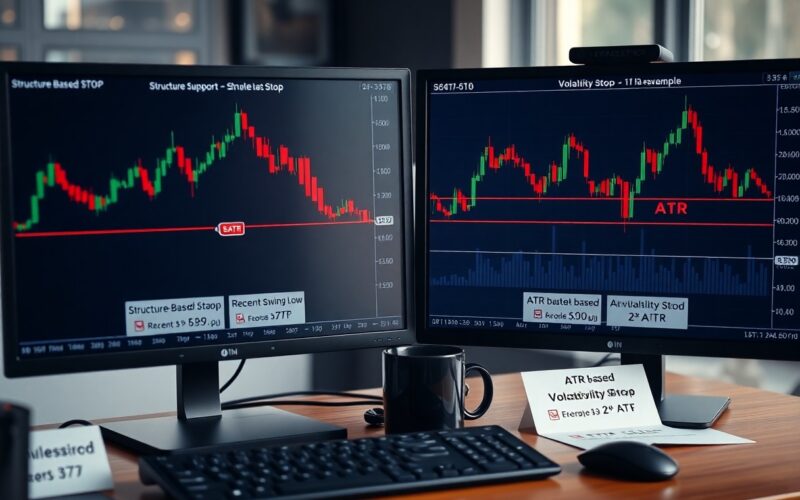
Most traders rely on guesswork, but you can improve your risk control by choosing between structure-based and volatility stops: structure-based stops sit beyond swing highs/lows - e.g., place your stop just below the prior swing low - giving logical trade invalidation, while volatility stops use ATR multiples - e.g., 2× ATR - to avoid market noise. Avoid placing overly tight stops because they can be hit by normal price oscillation, costing you trades and capital.Understanding Stop-Loss Orders Definition of Stop-Loss Orders You place a stop-loss order to instruct your broker to exit a position once the market hits a specified…
Read More
Volatility in Forex – ATR, Range, and How to Size Positions for Different Pairs

Volatility in Forex – ATR, Range, and How to Size Positions for Different Pairs

Over short-term swings, you must use ATR and daily range to judge volatility so you can size trades by pair; high ATR pairs are the most dangerous, so reduce risk with smaller position sizes, while low-volatility pairs let you scale up. This approach puts position sizing at the center of your risk management.Understanding Forex Volatility What is Forex Volatility? Volatility in FX measures how much and how quickly a currency pair's price moves over a given period; you can think of it as the width of the playing field you trade on. Traders commonly quantify it with tools like the…
Read More
News Trading Risks – Slippage, Spreads, and Volatility Management

News Trading Risks – Slippage, Spreads, and Volatility Management

You need to be aware of the significant risks associated with news trading, including slippage, spreads, and volatility. These factors can dramatically affect your trading outcomes, leading to unexpected losses or missed opportunities. Understanding how slippage can widen your entry and exit points, the impact of spreads during major announcements, and strategies for volatility management will empower you to navigate the market effectively and protect your investments.Understanding News Trading Definition of News Trading News trading refers to the practice of making trades based on the release of economic news and data. Traders capitalize on the volatility that often accompanies important…
Read More
Volatility Breakout Using Donchian Channels – Rules and Examples

Volatility Breakout Using Donchian Channels – Rules and Examples

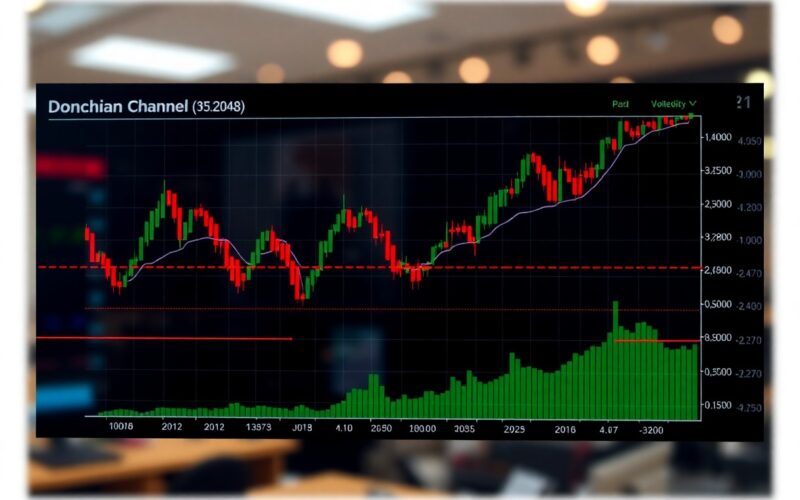
Just understanding how to implement Donchian Channels in your trading can transform your strategy. This tool helps you identify volatility breakouts, allowing you to capitalize on significant market movements. By following the defined rules for entry and exit, you can enhance your trading performance. In this post, you'll explore practical examples to solidify your knowledge and gain the confidence to apply these techniques effectively.Understanding Volatility Definition of Volatility Volatility refers to the degree of variation in the price of a financial instrument over time. It is commonly measured using the standard deviation or variance of returns. When the price of…
Read More
Understanding Forex Volatility – What Moves Currency Markets

Understanding Forex Volatility – What Moves Currency Markets

Volatility plays a pivotal role in the Forex market, influencing the dynamic nature of currency prices. As a trader, understanding what drives this volatility can significantly affect your trading strategy and outcomes. Factors such as economic indicators, geopolitical events, and market sentiment can lead to sharp fluctuations in currency values. By grasping these elements, you can better navigate risks and seize potential opportunities in your trading journey.The Elements of Market Sentiment Psychological Drivers in Forex Trading Every trader is affected by emotion, making psychological drivers a significant force in Forex trading. Fear and greed are particularly influential; these sentiments can…
Read More
Neural Networks in Forex – Volatility Prediction Strategies

Neural Networks in Forex – Volatility Prediction Strategies

Forex trading is increasingly influenced by advanced technologies, particularly neural networks, which offer innovative volatility prediction strategies. By leveraging these powerful algorithms, you can enhance your ability to foresee market fluctuations and make more informed trading decisions. As you examine into this fascinating intersection of finance and artificial intelligence, you'll discover how integrating neural networks into your trading toolkit can significantly improve your risk management and potentially lead to increased profitability in the highly volatile Forex market.The Role of Neural Networks in Financial Forecasting Defining Neural Networks and Their Mechanisms This technology mimics the workings of the human brain, allowing…
Read More