
Forex Strategies

Wyckoff Method Applied to Forex – Accumulation, Distribution, and Composite Operator Logic

Wyckoff Method Applied to Forex – Accumulation, Distribution, and Composite Operator Logic

You can identify high-probability forex trade setups by understanding how institutional players move the market. The Wyckoff Method reveals accumulation and distribution phases where smart money builds or exits positions. Recognizing these stages helps you avoid dangerous false breakouts and align with the composite operator's logic, increasing your edge in volatile currency markets.Key Takeaways: The Wyckoff Method helps traders identify market phases like accumulation and distribution, allowing them to spot when professional players are building or exiting positions in the forex market. Accumulation occurs after a downtrend, where informed traders quietly buy currency pairs at low prices, often disguising their…

Read More
Sharpe, Sortino, Calmar, and MAR – Which Performance Metric to Actually Trust

Sharpe, Sortino, Calmar, and MAR – Which Performance Metric to Actually Trust

It's time you understood how each performance metric reflects risk and return in your investments. The Sharpe ratio treats all volatility equally, but Sortino focuses only on downside risk, making it more realistic. Calmar and MAR ratios reveal how much pain you endure for gains, using drawdowns-often the most dangerous factor investors ignore. You need to know which one actually aligns with your goals.Key Takeaways: Sharpe Ratio measures returns relative to total volatility but treats upside and downside swings the same, which can misrepresent risk for strategies with frequent positive outliers. Sortino Ratio improves on the Sharpe by focusing only…
Read More
Mean Reversion Without Martingale – Position Sizing Rules That Keep You Alive

Mean Reversion Without Martingale – Position Sizing Rules That Keep You Alive

Just because mean reversion strategies seek price retracements doesn't mean you can ignore risk management; you must size positions to avoid catastrophic drawdowns and the silent threat of a martingale-like escalation. You will learn practical, statistically grounded rules that limit leverage, cap position growth after losses, and prioritize capital preservation, so your system survives bad runs and compounds gains responsibly. Keep rules simple, measurable, and aligned with volatility to control tail risk and maintain consistency.Understanding Mean Reversion Definition of Mean Reversion Mean reversion describes when a price series or spread tends to move back toward its long-term average after deviating…
Read More
Range Trading Done Right – Identifying Real Ranges vs Pre-Breakout Compression

Range Trading Done Right – Identifying Real Ranges vs Pre-Breakout Compression

There's a clear difference between a genuine trading range and pre-breakout compression, and you must spot it to protect your capital and seize opportunities. Use volume, reaction highs/lows and duration to confirm a true range, avoid entering on setups prone to false breakouts that drain positions, and favor setups with defined risk that offer reliable entries and asymmetric reward to improve your edge.Understanding Range Trading Definition of Range Trading Range trading is the practice of trading price oscillations confined between a defined support and resistance band rather than following a directional trend. You identify a range when price makes at…
Read More
Breakout Filters That Actually Matter – Volatility Regimes, Time-of-Day, and Retest Rules

Breakout Filters That Actually Matter – Volatility Regimes, Time-of-Day, and Retest Rules

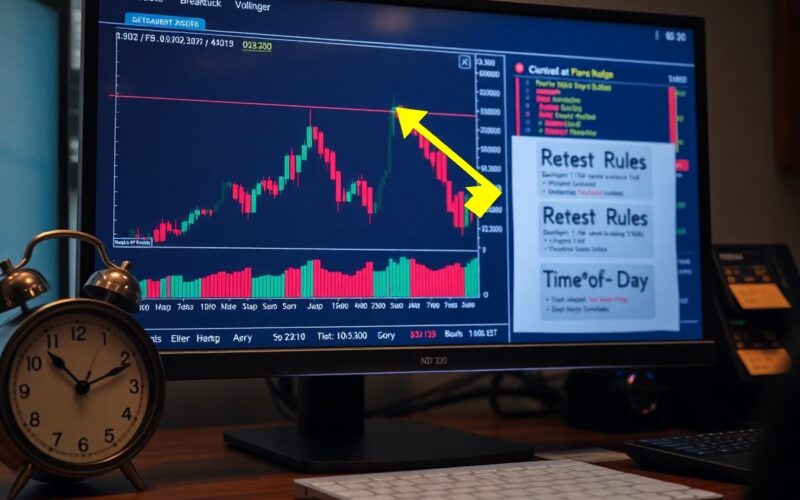
There's a disciplined way to filter breakouts so you avoid false moves and focus on high-probability trades: align entries with prevailing volatility regimes, respect the market's time-of-day liquidity patterns, and enforce strict retest rules before committing capital. By applying these filters you reduce exposure to dangerous false breakouts, capture cleaner trend entries, and make your trade management more consistent - practical steps that improve your edge without adding noise. You should filter breakouts by volatility regimes, respect dominant time-of-day behavior, and enforce strict retest rules to avoid false breakouts that can wipe positions and to boost your win rate and…
Read More
Scaling In vs Scaling Out – Which Improves Expectancy and When

Scaling In vs Scaling Out – Which Improves Expectancy and When

Strategy you choose between Scaling In and Scaling Out shapes how you manage position size, risk and returns; Scaling In can increase expected returns by letting you add to winners while Scaling Out locks profits and reduces volatility, but both carry tradeoffs-concentrated losses risk when adding and missed gains when exiting early-so you must align the method with your edge, timeframe and risk tolerance to truly improve expectancy.Understanding Scaling Concepts Definition of Scaling In Scaling in means building a position in stages rather than committing full size at one price: you might buy 4 lots of 250 shares instead of…
Read More
Hedging in Forex – When It Reduces Risk and When It Just Doubles Your Spreads

Hedging in Forex – When It Reduces Risk and When It Just Doubles Your Spreads

Forex hedging can reduce your risk on volatile positions, but if misused it can double your spreads through additional transaction costs and widenings; you must weigh the protective benefits against higher costs, margin demands and operational complexity before deploying hedges.Understanding Forex Hedging Definition of Hedging in Forex Hedging in forex means taking a position (or positions) that offsets potential losses from your primary exposure to a currency pair - for example, opening a short EUR/USD to offset an existing long. You can accomplish this with spot trades, forwards, options, or correlated instruments; each method changes how you pay for protection,…
Read More
How Central Banks ‘Talk’ Markets – Interpreting Guidance Without Overtrading

How Central Banks ‘Talk’ Markets – Interpreting Guidance Without Overtrading

Many central bank statements are deliberate signals, and you should parse policy intent, data conditionality and messaging tone rather than fixating on single phrases; doing so prevents overtrading that erodes returns and lets you use clear guidance to position appropriately, keeping your risk sizing and timing disciplined.Understanding Central Bank Communication The Role of Central Banks You should treat central banks as both policy makers and market communicators: the Federal Reserve balances a dual mandate of 2% inflation and maximum employment, the European Central Bank prioritizes price stability, and the Bank of England targets 2% inflation as well. Their decisions at…
Read More
Stop-Loss Placement – Structure-Based Stops vs Volatility Stops (with examples)

Stop-Loss Placement – Structure-Based Stops vs Volatility Stops (with examples)

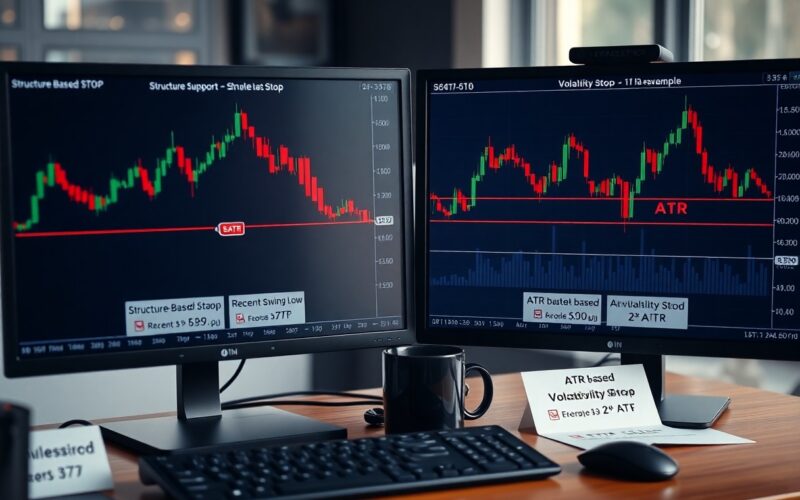
Most traders rely on guesswork, but you can improve your risk control by choosing between structure-based and volatility stops: structure-based stops sit beyond swing highs/lows - e.g., place your stop just below the prior swing low - giving logical trade invalidation, while volatility stops use ATR multiples - e.g., 2× ATR - to avoid market noise. Avoid placing overly tight stops because they can be hit by normal price oscillation, costing you trades and capital.Understanding Stop-Loss Orders Definition of Stop-Loss Orders You place a stop-loss order to instruct your broker to exit a position once the market hits a specified…
Read More
Partial Take-Profits and Trade Management – A Quant Framework for Discretionary Traders

Partial Take-Profits and Trade Management – A Quant Framework for Discretionary Traders

Framework for partial take-profits helps you blend quantitative rules with discretionary judgment so you can scale out of positions, lock in gains, and manage exposure; by defining clear size, price and time rules you improve risk-adjusted returns and consistency, while being aware that misapplied scaling can amplify tail risk and transaction costs if you retain oversized residual positions.Understanding Take-Profits Definition of Take-Profits You set a take-profit as a predefined level where you exit a trade to realize gains, typically via a limit order or an automated exit rule. For example, if you buy at 100 with a 5-point stop (95),…
Read More