brokers

Negative Balance Protection – When It Works, When It Doesn’t, and How Brokers Implement It

Negative Balance Protection – When It Works, When It Doesn’t, and How Brokers Implement It

Just because a broker advertises negative balance protection, you must verify terms: some brokers guarantee you cannot lose more than your deposited funds, while others provide limited protection only during normal market conditions; fast market gaps, negative swaps, or deliberately excluded instruments can leave your account exposed. Learn how different execution models, margin calls and liquidity providers affect coverage so you can choose brokers and risk settings that align with your trading needs.Understanding Negative Balance Protection Definition of Negative Balance Protection Negative Balance Protection (NBP) means that you cannot end up owing the broker more than your account balance; if…
Read More
Understanding A-Book vs B-Book – Why It Affects Spreads, Slippage and Conflict of Interest

Understanding A-Book vs B-Book – Why It Affects Spreads, Slippage and Conflict of Interest

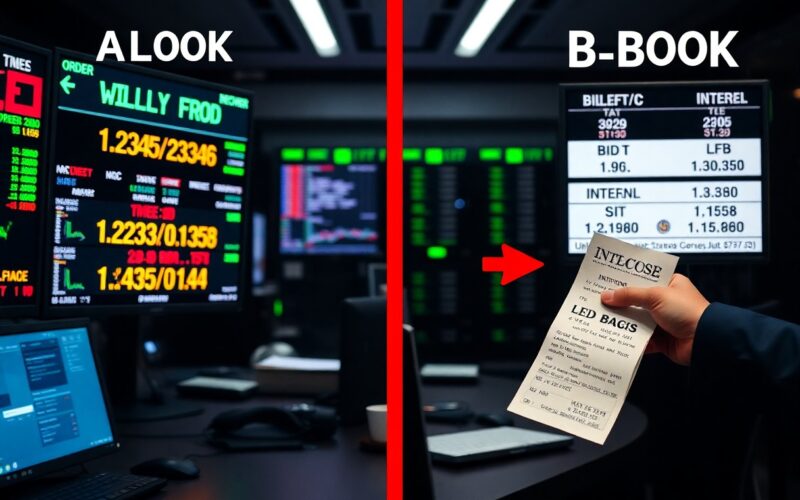
It's imperative that you understand how broker models shape execution and incentives: an A-Book routes your orders to the market, generally producing tighter spreads and less slippage and aligning the broker with your success, while a B-Book internalizes your trades, which can create wider spreads, greater slippage and potential conflicts of interest that directly affect your P&L.Defining A-Book vs B-Book Overview of A-Book Model Under an A-Book model your trades are passed straight through to liquidity providers or an ECN/STP network, so the broker acts mainly as an intermediary. In practice that means you often see raw spreads as low…
Read More
Brokers for Algorithmic and EA Trading – Latency, VPS Integration, and API Access Compared

Brokers for Algorithmic and EA Trading – Latency, VPS Integration, and API Access Compared

Algorithmic trading can significantly enhance your trading strategy, but the choice of broker is vital. You need to consider factors like latency, which affects execution speed, VPS integration for reliable connectivity, and API access that allows for custom solutions. Understanding how these elements impact your trading performance will empower you to select the best broker for your needs, ensuring your algorithmic and expert advisor (EA) trades operate at peak efficiency.Understanding Algorithmic Trading Definition of Algorithmic Trading Algorithmic trading involves using automated systems and predefined rules to execute trades in financial markets. These systems can analyze market conditions, identify trading opportunities,…
Read More
How Forex Brokers Handle Corporate Actions on CFDs – Dividends, Rolls, and Adjustments

How Forex Brokers Handle Corporate Actions on CFDs – Dividends, Rolls, and Adjustments

Most traders are unaware that corporate actions can significantly impact your Contracts for Difference (CFDs). Understanding how dividends, rolls, and adjustments are handled by your forex broker is crucial for effectively managing your trading strategy. You might encounter unexpected changes to your positions based on these actions, which can lead to both risks and opportunities for profit. By grasping these concepts, you can better navigate the complex landscape of forex trading and make more informed decisions. Understanding Corporate Actions in Forex Trading Definition of Corporate Actions Corporate actions are events initiated by companies that impact their stock, including changes in…
Read More
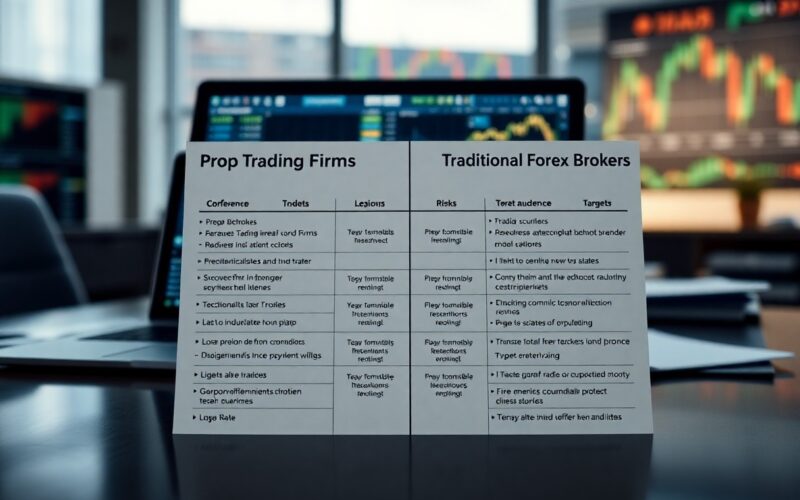
Prop Trading Firms vs Traditional Forex Brokers – Key Differences, Risks, and Who They’re For

Prop Trading Firms vs Traditional Forex Brokers – Key Differences, Risks, and Who They’re For

There's a significant distinction between prop trading firms and traditional Forex brokers that could impact your trading experience. While prop firms provide you with capital to trade and often share in the profits, Forex brokers mainly act as intermediaries. You must consider the risks associated with each option and understand which one aligns better with your trading goals and risk tolerance. This guide will break down the key differences, highlight potential pitfalls, and help you determine which option is best suited for you.Overview of Prop Trading Firms Definition and Functionality Prop trading firms, or proprietary trading firms, are companies that…
Read More
ECN vs STP vs Market Maker Brokers – What’s the Real Difference?

ECN vs STP vs Market Maker Brokers – What’s the Real Difference?

STP brokers offer direct access to the interbank market, allowing you to execute trades with minimal delays. However, understanding the differences between ECN, STP, and Market Maker brokers is important for making informed trading decisions. Each type has unique advantages and potential drawbacks, impacting your trading costs, execution speed, and overall experience. In this post, you'll discover how each broker type operates and which one aligns best with your trading goals.Decoding the ECN Advantage: Transparency and Speed The Mechanics of ECN Trading ECN trading operates by connecting you directly with other market participants, such as banks and financial institutions, rather…
Read More
ECN vs STP vs Market Maker Brokers – What’s the Real Difference?

ECN vs STP vs Market Maker Brokers – What’s the Real Difference?

STP brokers offer direct access to the interbank market, allowing you to execute trades with minimal delays. However, understanding the differences between ECN, STP, and Market Maker brokers is important for making informed trading decisions. Each type has unique advantages and potential drawbacks, impacting your trading costs, execution speed, and overall experience. In this post, you'll discover how each broker type operates and which one aligns best with your trading goals.Decoding the ECN Advantage: Transparency and Speed The Mechanics of ECN Trading ECN trading operates by connecting you directly with other market participants, such as banks and financial institutions, rather…
Read More
Demo vs Live Accounts – How Brokers Make Practice Feel Real (or Not)

Demo vs Live Accounts – How Brokers Make Practice Feel Real (or Not)

Live trading requires you to fully understand the difference between demo and live accounts. While demo accounts offer a risk-free environment that lets you practice trading strategies, they often lack the emotional pressure that comes with real monetary stakes. Understanding how brokers simulate trading experiences will help you identify the limitations of demo accounts and prepare you for the real-life challenges you'll face in live trading. Equip yourself with this knowledge to navigate the transition from practice to actual trading more effectively.The Anatomy of a Demo Account Core Features of Demo Accounts Demo accounts are primarily designed to mimic the…
Read More
Ultra‑Low‑Latency Brokers – What They Are and Who Needs Them

Ultra‑Low‑Latency Brokers – What They Are and Who Needs Them

Just as speed can make a significant difference in financial markets, ultra-low-latency brokers cater to traders who demand rapid execution and minimal delay. These brokers use advanced technology to deliver exceptionally fast order execution, enabling you to capitalize on fleeting market opportunities. If you find yourself in high-frequency trading or require precise timing for your trades, understanding how these brokers operate and who should utilize their services is vital for enhancing your trading strategy and performance. This post will guide you through the benefits and considerations surrounding ultra-low-latency brokers.The Anatomy of Ultra-Low-Latency Brokers What Defines Ultra-Low Latency? Ultra-low latency is…
Read More
The Future of Forex Brokers: Embracing Technological Advancements

The Future of Forex Brokers: Embracing Technological Advancements

In today’s fast-paced financial landscape, the forex market is undergoing a dramatic transformation. Forex brokers are no longer reliant on legacy systems or manual processes; instead, they are leveraging cutting-edge technologies to deliver faster, safer, and more personalized trading experiences. This evolution not only redefines operational efficiency but also broadens market accessibility for traders around the globe. A New Era in Forex Trading Historically, forex trading involved telephone-based transactions and manually operated platforms that often introduced delays, errors, and inefficiencies. Today’s brokers have embraced digital transformation to meet the increasing demands of global traders. The shift toward advanced technologies has…
Read More