
Blog

ATR-Based Stops and Trailing Exits – Letting Winners Run

ATR-Based Stops and Trailing Exits – Letting Winners Run

There's a powerful strategy waiting for you in trading: using Average True Range (ATR) to set your stops and trailing exits. By implementing ATR-based stops, you can adaptively protect your capital while allowing winning trades to continue running. This approach not only enhances your risk management but also maximizes your profit potential during trending markets. Understanding how to effectively use ATR can help you avoid premature exits and ride substantial price movements without emotional decision-making.The Mechanics of ATR: Understanding Average True Range Defining ATR and Its Role in Trading Average True Range (ATR) is a volatility indicator that quantifies the…

Read More
Broker Regulation by Region – FCA vs CySEC vs ASIC vs NFA

Broker Regulation by Region – FCA vs CySEC vs ASIC vs NFA

You need to navigate the complex world of broker regulations to ensure your investments are protected. The FCA in the UK, CySEC in Cyprus, ASIC in Australia, and NFA in the USA each have distinct frameworks that govern broker operations. Understanding these differences will help you identify reliable brokers that adhere to stringent standards, as well as those that may expose you to higher risks. In this post, we'll explore how each regulatory body operates and what it means for your trading experience.The Role of Regulatory Bodies in Financial Markets Importance of Regulation in Protecting Investors Regulatory bodies play a…
Read More
The London Breakout Strategy – Setup, Rules, and Risk Control

The London Breakout Strategy – Setup, Rules, and Risk Control

Just understanding the London Breakout Strategy can significantly enhance your trading during peak market hours. This strategy capitalizes on the volatility that often accompanies the London session's opening, providing you with a framework for identifying high-probability setups. You will learn the imperative rules for entering and exiting trades, as well as how to implement effective risk control measures to protect your capital. By mastering this technique, you can navigate the Forex market with greater confidence and precision.The Mechanics of the London Breakout What Defines a London Breakout? A London breakout occurs when there is a significant price movement after the…
Read More
Funding & Withdrawals – Cards, Bank Wires, and E-Wallets—What to Expect

Funding & Withdrawals – Cards, Bank Wires, and E-Wallets—What to Expect

Payments are a key aspect of managing your financial transactions, and understanding the nuances of funding and withdrawals is necessary for a smooth experience. You will encounter various methods like cards, bank wires, and e-wallets, each with its own processing times, fees, and security measures. Knowing what to anticipate can help you make informed choices, ensuring that your funds are transferred safely and efficiently while avoiding potential pitfalls associated with each option.Navigating the Landscape of Payment Options Credit and Debit Cards: Pros and Cons Pros Cons Widely accepted across most merchants Potential for high-interest rates on unpaid balances Instant transactions…
Read More
Building a Rules-Based Strategy – From Edge Hypothesis to Live Deployment

Building a Rules-Based Strategy – From Edge Hypothesis to Live Deployment

You can transform your trading approach by implementing a rules-based strategy, seamlessly transitioning from your edge hypothesis to live deployment. This process involves defining specific criteria, testing your hypotheses, and continuously refining your methods to ensure profitability and risk management. By adhering to a structured framework, you can mitigate emotional decision-making and maintain consistency in your trades. Understanding the key components of this strategy will allow you to navigate live markets with confidence and clarity.Formulating the Edge Hypothesis Defining Your Market Edge Your market edge reflects the unique insights or advantages you possess over competitors. Start by identifying inefficiencies in…
Read More
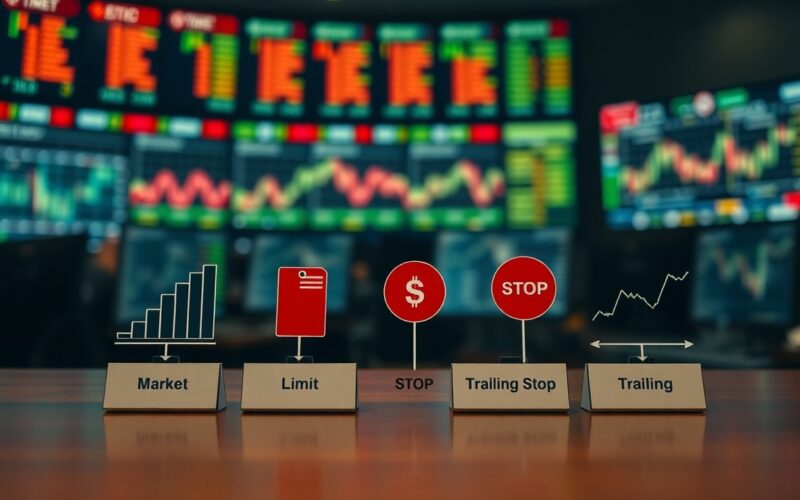
Order Types 101 – Market, Limit, Stop, and Trailing Stop Explained

Order Types 101 – Market, Limit, Stop, and Trailing Stop Explained

Over time, understanding order types can significantly enhance your trading strategy. This post will clarify the four primary order types—market, limit, stop, and trailing stop—to help you make informed decisions. Each order type serves a distinct purpose, allowing you to manage risk and seize opportunities effectively. By mastering these concepts, you can navigate the trading landscape with greater confidence and precision.The Mechanics of Market Orders Instant Transactions: How Market Orders Function Market orders are designed for immediate execution at the current market price. When you place a market order, it gets filled instantly at the best available price, ensuring that…
Read More
ECN vs STP vs Market Maker Brokers – What’s the Real Difference?

ECN vs STP vs Market Maker Brokers – What’s the Real Difference?

STP brokers offer direct access to the interbank market, allowing you to execute trades with minimal delays. However, understanding the differences between ECN, STP, and Market Maker brokers is important for making informed trading decisions. Each type has unique advantages and potential drawbacks, impacting your trading costs, execution speed, and overall experience. In this post, you'll discover how each broker type operates and which one aligns best with your trading goals.Decoding the ECN Advantage: Transparency and Speed The Mechanics of ECN Trading ECN trading operates by connecting you directly with other market participants, such as banks and financial institutions, rather…
Read More
Correlation in FX – USDX, Commodities, and Pair Relationships

Correlation in FX – USDX, Commodities, and Pair Relationships

Over the vast landscape of foreign exchange (FX) trading, understanding the correlation between the USDX, commodities, and currency pairs is vital for your success. These relationships can significantly impact your trading decisions and ultimately your profitability. By grasping how the strength of the US dollar interacts with various commodities and other currencies, you can better position your investments and manage risk effectively. This post will help you navigate these interconnected markets and enhance your trading strategies.The Interplay of Currency Strength and Commodity Prices How USDX Influences Commodities The U.S. Dollar Index (USDX) serves as a benchmark for the dollar's strength…
Read More
Demo vs Live Accounts – How Brokers Make Practice Feel Real (or Not)

Demo vs Live Accounts – How Brokers Make Practice Feel Real (or Not)

Live trading requires you to fully understand the difference between demo and live accounts. While demo accounts offer a risk-free environment that lets you practice trading strategies, they often lack the emotional pressure that comes with real monetary stakes. Understanding how brokers simulate trading experiences will help you identify the limitations of demo accounts and prepare you for the real-life challenges you'll face in live trading. Equip yourself with this knowledge to navigate the transition from practice to actual trading more effectively.The Anatomy of a Demo Account Core Features of Demo Accounts Demo accounts are primarily designed to mimic the…
Read More
Multi-Asset FX Strategy – Using Gold and Oil to Time USD Pairs

Multi-Asset FX Strategy – Using Gold and Oil to Time USD Pairs

It's imperative to understand how fluctuations in gold and oil prices can significantly influence USD pairs in your trading strategy. By integrating these commodities into your analysis, you can improve your timing and overall success in the foreign exchange market. This multi-asset approach not only provides you with valuable insights but also helps you mitigate risks associated with currency volatility. Embracing this strategy enables you to make more informed trading decisions and navigate the complexities of FX markets effectively.The Interconnectedness of Gold, Oil, and USD The Historical Relationship Between Commodities and Currency Your understanding of the historical relationship between commodities…
Read More